Afripol.org


      Africa Political & Economic Strategic Center
                           
(AFRIPOL)I

 
IDEAS HAVE CONSEQUENCES   US Export-Import Bank approved $1 Billion loan for Nigerian Banks  

PRESS RELEASE            AFRIPOL'S NEWS

Uganda’s Oil discovery calls for cautious optimism

The people of Anambra State have spoken: Now let’s get to work!


Davos: What can the world economic meeting offer to Africa?


Oando Plc raising N21 Billion Naira


Aid to Haiti : Nigeria, South Africa and African Union should work together  


Nigeria's Central Bank on lower interest

Nigeria:Re-branding and Image of a nation in 21st century

China’s innovative agricultural investment in Mozambique

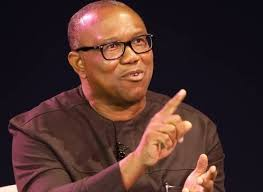
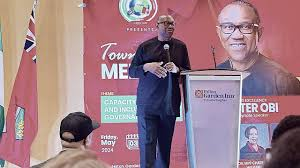
Governor Peter Obi: Does he deserve a second term?

Video:Achebe Colloquium on Africa (Nigerian Elections)

GOV. SHEKARAU BAGS AFRIPOL ACHIEVEMENT AWARD


GOVER      IMF: Increasing SDR can benefit Africa

:           Recapitalization of Banks in Nigeria

Uduaghan Talks Climate Change at Global Summit

Mixed feelings on Nigerian Independence Day

ThisDay Newspaper festival of Ideas

France to count happiness in GDP

Rebuilding and protecting the falling naira

Central Bank of Nigeria needs to reform banking system

Afripol praises central banker Gill Marcus

Naira depreciates as external reserves drop

OPEC and Oil Price

Peaceful Africa: Stand on conflict Resolution

Africa's chance to shine amid global turmoil

President Obama to visit Ghana not Nigeria

The collapse of Naira: Nigeria's strategic blunder

Africom: The security need for 21st century

G-20 summit: Where is Nigeria?

Obama Administration: The Policy for Nigeria

US 2008 Human Rights Report: Nigeria

Afripol calls for strategic peace in Niger Delta

Desmond Tutu: A word of caution to Obama

NigeriaTown in China ( Audio slide narrative)

The water vendors of Nigeria

President Obama’s connection to Nigeria

Nigeria ranked 117 in econo- freedom index

Confronting ecological disaster in Anambra state and South eastern Nigeria

NIGERIA VENTURING INTO NUCLEAR AGE

Environmental Project in Kano State, Nigeria

Zeroth strategy for waste oil disposal in Nigeria

Barack ObamaTakes Presidency Oath

Barack Obama is sworn in during the inauguration ceremony in WashingtonAP A historic event, the president-elect was sworn in and he became the first African-American US President. The son of a black man from Kenya and a white woman from Kansas become the 44th president of United States of America after defeating Senator John McCain in a landside election.

Emerging economies must reject handouts and bailouts capitalism

Nigeria payment of foreign debt: The largest transfer of wealth in modern time

#87 Nigeria: Best Countries for Business

United States confirms KBR Nigeria bribes

Two Sides of Lagos.    Reclaiming Lagos 

Racism at Beijing Olympics

Bakassi: As we reach the end of the Road

Rwanda accuses France over 1994 genocide

  The indictment of Omar al-bashir, Sudanese


Sudanese President Omar Hassan al-Bashir was charged for genocide in a five-year campaign of violence in the country's Darfur region by International Criminal Court. The prosecutor Luis Moreno-Ocampo of the International Criminal Court is seeking the arrest of the president... "We request a warrant for the crime of genocide -- 6a, b and c -- basically massive rapes and the condition of 2.5 million people -- in addition we charged him with crimes against humanity and war crimes."

Is Africa the sick baby of the world?

G8 Leaders Statement on Zimbabwe

The Zimbabwe Electoral Commission declared the sole candidate Robert Mugabe the winner of presidential runoff  despite the withdrawal of the opposition candidate. Nelson Mandela called the violent crisis in Zimbabwe "a tragic failure of leadership," and President Bush called the election a "sham."
ROBERT MUGABE: THE RIGHT MOMENT TO EXIT  

A Nigerian state wants mining reparations

In South Africa Chinese is classify as Black

Nigerians the most educated in the U.S.

African Banks and the issue of bonds

Ghana Government: $750m bond target

Africa leaders must unite against EPA

A world of casual racism' exposed at British Airways

MALARIA: A COMMUNITY NIGHTMARE, COMMUNITY INVOLVEMENT IN ROLLING BACK MALARIA (RBM)

Malaria and the politics of disease

NIGERIA'S STRATEGIC PLAN: STEPS TO ECONOMIC POWERHOUSE BY THE YEAR 2020

Index of State Weakness in the Developing World -  Susan E. Rice and Stewart Patrick

President Bush: Second coming to Africa

Dr.Ngozi Okonjo-Iweala Bags Afripol       Achievement Award

FORMER PRESIDENT JERRY J. RAWLINGS BAGS AFRIPOL ACHIEVEMENT AWARD (click)

GHANA CAN MAKE OIL WORK FOR THEM

OPINIONS                                               
Superstition of Democracy By F. Buckley

Chimamanda Adichie on Africa's Debt

 Onitsha Needs Environmental facelift        

The new scramble for Africa's resources

=======================================

  Yar'Adua sworn in as Nigeria's president
   

PROFILE OF THE NEW PRESIDENT

DEBT CANCELLATION

VIEWS ON NIGERIA

HOLLYWOOD AND AFRICA             

MISSION STATEMENT    

NEWS OF INTEREST & ANALYSIS                             

ABOUT AFRIPOL

STRATEGIC COMMENTARIES

CONTACT  

PHOTOGALLERY                                                     

STATE OF POLITICAL ECONOMY                     

CONFLICT ANALYSIS & RESOLUTION

HUMAN RIGHT WATCH

BOOK REVIEWS & RECOMMENDATIONS

DIALOGUES AND LEADERSHIP

News Links                              Nigerian News Service                          Daily Trust        
The Sun
Daily Champion
Daily Independent
NigeriaWorld
Nigeria Tribune
Newswatch
The Punch
MSNBC Africa
The Guardian
The News
Thisday
The Tide
Vanguard
The Nation
BusinessDay
BBC Africa
CNN
Yahoo Africa
 
                      CurrencyConverter$,N,C                 


Pictorial News from Africa!


Democracy and Good Governance Speech By U.S. Consul General Brian L. Browne at University of Lagos....> click for details

The new Naira notes have their values written in Nigeria's three major languages, Igbo, Hausa, and Yoruba. Arabic inscriptions have been removed.  


                   War against malaria


Founder's Corner:Policy Research & Strategic Analysis.
 

Reflection & Perspective on Africa:Debt, Aid and Trade


Onovo & Nigerian Police                 Rebuilding falling naira     Why debt cancellation?                      Nigeria & Corruption  

ETHIOPIA & STARBUCKS       Peaceful Africa
                                                                                        
G8 & AFRICA                                               On slavery & Abolition 


NIGERIA'S STRATEGIC PLAN

 vs

Africa Political and Economic Strategic Center (Afripol) is foremost a public policy center whose fundamental objective is to broaden the parameters of public policy debates in Africa. To advocate, promote and encourage free enterprise, democracy, sustainable green environment, human rights, conflict resolutions, transparency and probity in Africa.

                     Quotations of the Week                                          

AFRICA: The Regional Impacts of Climate Change (Executive Summary)

Several climate regimes characterize the African continent; the wet tropical, dry tropical, and alternating wet and dry climates are the most common. Many countries on the continent are prone to recurrent droughts; some drought episodes, particularly in southeast Africa, are associated with El NiZo-Southern Oscillation (ENSO) phenomena. Deterioration in terms of trade, inappropriate policies, high population growth rates, and lack of significant investment-coupled with a highly variable climate-have made it difficult for several countries to develop patterns of livelihood that would reduce pressure on the natural resource base. Under the assumption that access to adequate financing is not provided, Africa is the continent most vulnerable to the impacts of projected changes because widespread poverty limits adaptation capabilities.

Ecosystems: In Africa today, tropical forests and rangelands are under threat from population pressures and systems of land use. Generally apparent effects of these threats include loss of biodiversity, rapid deterioration in land cover, and depletion of water availability through destruction of catchments and aquifers. Changes in climate will interact with these underlying changes in the environment, adding further stresses to a deteriorating situation. A sustained increase in mean ambient temperatures beyond 1EC would cause significant changes in forest and rangeland cover; species distribution, composition, and migration patterns; and biome distribution. Many organisms in the deserts already are near their tolerance limits, and some may not be able to adapt further under hotter conditions. Arid to semi-arid subregions and the grassland areas of eastern and southern Africa, as well as areas currently under threat from land degradation and desertification, are particularly vulnerable. Were rainfall to increase as projected by some general circulation models (GCMs) in the highlands of east Africa and equatorial central Africa, marginal lands would become more productive than they are now. These effects are likely to be negated, however, by population pressure on marginal forests and rangelands. Adaptive options include control of deforestation, improved rangeland management, expansion of protected areas, and sustainable management of forests.

Hydrology and Water Resources: Of the 19 countries around the world currently classified as water-stressed, more are in Africa than in any other region-and this number is likely to increase, independent of climate change, as a result of increases in demand resulting from population growth, degradation of watersheds caused by land-use change, and siltation of river basins. A reduction in precipitation projected by some GCMs for the Sahel and southern Africa-if accompanied by high interannual variability-could be detrimental to the hydrological balance of the continent and disrupt various water-dependent socioeconomic activities. Variable climatic conditions may render the management of water resources more difficult both within and between countries. A drop in water level in dams and rivers could adversely affect the quality of water by increasing the concentrations of sewage waste and industrial effluents, thereby increasing the potential for the outbreak of diseases and reducing the quality and quantity of fresh water available for domestic use. Adaptation options include water harvesting, management of water outflow from dams, and more efficient water usage.

Agriculture and Food Security: Except in the oil-exporting countries, agriculture is the economic mainstay in most African countries, contributing 20-30% of gross domestic product (GDP) in sub-Saharan Africa and 55% of the total value of African exports. In most African countries, farming depends entirely on the quality of the rainy season-a situation that makes Africa particularly vulnerable to climate change. Increased droughts could seriously impact the availability of food, as in the Horn of Africa and southern Africa during the 1980s and 1990s. A rise in mean winter temperatures also would be detrimental to the production of winter wheat and fruits that need the winter chill. However, in subtropical Africa, warmer winters would reduce the incidence of damaging frosts, making it possible to grow horticultural produce susceptible to frosts at higher elevations than is possible at present. Productivity of freshwater fisheries may increase, although the mix of fish species could be altered. Changes in ocean dynamics could lead to changes in the migratory patterns of fish and possibly to reduced fish landings, especially in coastal artisinal fisheries.

Coastal Systems: Several African coastal zones-many of which already are under stress from population pressure and conflicting uses-would be adversely affected by sea-level rise associated with climate change. The coastal nations of west and central Africa (e.g., Senegal, The Gambia, Sierra Leone, Nigeria, Cameroon, Gabon, Angola) have low-lying lagoonal coasts that are susceptible to erosion and hence are threatened by sea-level rise, particularly because most of the countries in this area have major and rapidly expanding cities on the coast. The west coast often is buffeted by storm surges and currently is at risk from erosion, inundation, and extreme storm events. The coastal zone of east Africa also will be affected, although this area experiences calm conditions through much of the year. However, sea-level rise and climatic variation may reduce the buffer effect of coral and patch reefs along the east coast, increasing the potential for erosion. A number of studies indicate that a sizable proportion of the northern part of the Nile delta will be lost through a combination of inundation and erosion, with consequent loss of agricultural land and urban areas. Adaptation measures in African coastal zones are available but would be very costly, as a percentage of GDP, for many countries. These measures could include erection of sea walls and relocation of vulnerable human settlements and other socioeconomic facilities.

Human Settlement, Industry, and Transportation: The main challenges likely to face African populations will emanate from extreme climate events such as floods (and resulting landslides in some areas), strong winds, droughts, and tidal waves. Individuals living in marginal areas may be forced to migrate to urban areas (where infrastructure already is approaching its limits as a result of population pressure) if the marginal lands become less productive under new climate conditions. Climate change could worsen current trends in depletion of biomass energy resources. Reduced stream flows would cause reductions in hydropower production, leading to negative effects on industrial productivity and costly relocation of some industrial plants. Management of pollution, sanitation, waste disposal, water supply, and public health, as well as provision of adequate infrastructure in urban areas, could become more difficult and costly under changed climate conditions.

Human Health: Africa is expected to be at risk primarily from increased incidences of vector-borne diseases and reduced nutritional status. A warmer environment could open up new areas for malaria; altered temperature and rainfall patterns also could increase the incidence of yellow fever, dengue fever, onchocerciasis, and trypanosomiasis. Increased morbidity and mortality in subregions where vector-borne diseases increase following climatic changes would have far-reaching economic consequences. In view of the poor economic status of most African nations, global efforts will be necessary to tackle the potential health effects.

Tourism and Wildlife: Tourism-one of Africa's fastest-growing industries-is based on wildlife, nature reserves, coastal resorts, and an abundant water supply for recreation. Projected droughts and/or reduction in precipitation in the Sahel and eastern and southern Africa would devastate wildlife and reduce the attractiveness of some nature reserves, thereby reducing income from current vast investments in tourism.

Conclusions: The African continent is particularly vulnerable to the impacts of climate change because of factors such as widespread poverty, recurrent droughts, inequitable land distribution, and overdependence on rain-fed agriculture. Although adaptation options, including traditional coping strategies, theoretically are available, in practice the human, infrastructural, and economic response capacity to effect timely response actions may well be beyond the economic means of some countries.

Source:GRID-Arendal on Intergovernmental Panel on Climate Change (IPCC)=================================================================

Jean Ping's opening speech for AU climate change summit

25 August 2009, Africa Union

Addis Ababa: The issue of climate change that we have come to discuss here today is of significant importance to the African Continent. Scientific projections unequivocally indicate that Africa will be hit hardest by the impacts of climate change as compared to other continents. Among other impacts, climate change will fundamentally affect agricultural productivity, increase the prevalence of diseases and poverty, increase water stress and trigger off conflicts and war. Africa's development aspirations are at stake unless urgent steps are taken to address the problem of climate change. It goes without saying that although Africa is least responsible for global warming, it is however suffering from the impacts of climate change. Therefore, Africa suffers most from the problem that it has not created!

The climate change challenge before us is enormous. However, Africa has faced even greater challenges in the past and I am confident that we shall prevail over this present challenge.

Given that Africa is already suffering from the severe effects of climate change, we all must urgently seek solutions. Fortunately, the international community is already engaged in a protracted process that will hopefully lead to an ambitious and effective international agreement to combat climate change at Copenhagen, Denmark in December this year. This is the time for Africa to aggressively engage in this process to ensure that Africa's concerns in this new international climate change agreement are effectively addressed.

Due to the great importance that the African Union attaches to the issue of climate change, the Heads of State and Government have recently taken important decisions on climate change.

Your Excellencies, Honourable Ministers, Distinguished Delegates, Ladies and Gentlemen, permit me at this stage to mention the important decisions on climate change that the African Union has taken in the recent past:

1. The 12th Ordinary Session of the African Union Assembly of Heads of State and Government in February 2009, held in Addis Ababa, Ethiopia adopted a historic decision on climate change the key elements of which include:

a)That the global carbon trading mechanisms that are expected to emerge from international negotiations on climate change should give Africa an opportunity to demand and get compensation for the damage to its economy caused by global warming and underlines in this regard the fact that despite contributing virtually nothing to global warming Africa has been one of the primary victims of its consequences.

b)That Africa needs to be represented by one delegation, which is empowered to negotiate on behalf of all Member States, with the mandate to ensure that resource flow to Africa is not reduced. The AU Commission was mandated to work out modalities of such representation.

2. The 13th Ordinary Session of African Union Assembly of Heads of State and Government held in Sirte, Libya in July, 2009 took another important and historic decision and established the Conference of African Heads of State and Government on Climate Change (CAHOSCC) comprising of the following:

The Chairperson of the African Union;
The Federal Democratic Republic of Ethiopia;
The Republic of Algeria;
The Republic of Congo;
The Republic of Kenya;
The Republic of Mauritius;
The Republic of Mozambique;
The Republic of Nigeria;
The Republic of Uganda;
The Chairperson of the African Ministerial Conference on Environment;
The Chairperson of the African Union Commission; and
Technical Negotiators on climate change from Member states.

Another key element of the 13th Ordinary Session of African Union Assembly of Heads of State and Government held in Sirte, Libya in July, 2009 is that the Assembly mandated CAHOSCC, all AU Ambassadors and African negotiators from member States attending the negotiation process towards the 15th Conference of Parties (COP 15) to make use of the approved African common position on climate change.

Your Excellencies, Honourable Ministers, Distinguished Delegates, Ladies and Gentlemen, you will all agree with me that the decisions that I have just mentioned signify a fundamental shift in the collective policy and practice of African States towards international negotiations on climate change.

First and foremost, the decisions articulate a key political message that should inform the content of Africa's common position on key climate change agenda items that are under negotiation.

Secondly, Africa will henceforth be represented by one delegation at international meetings on climate change. The Conference of African Heads of State and Government on Climate Change (CAHOSCC) will spearhead Africa's negotiations on climate change.

I now wish to take this opportunity to thank all our technical experts on climate change from all across Africa for the achievements they have registered in their endeavours over the course of years. I believe that CAHOSCC will build from these very achievements to move the process forward to ensure that our work proceeds in a coordinated and consistent manner.

It is the expectation of the AU Commission that this meeting will produce the first-ever AU-Summit sanctioned key political messages on climate change from Africa, which will be widely distributed in the continent and throughout the World. This output will be informed by various political processes on climate change taking place in the continent. Secondly, there will be a close alignment of technical positions being negotiated by the African Group with the political messages from the continent, especially from the CAHOSCC.

Te outcome of this meeting will inform the deliberations of the CAHOSCC meeting being planned on the sidelines of the Special Summit in Tripoli, Libya on the 31st August 2009. Hence your deliberations this afternoon is very important. I am sure that CAHOSCC will appreciate the quality of the report that you will present to it.
At this juncture, I take this opportunity to declare the Meeting of the Representatives of the Conference of African Heads of State and Government on Climate Change (CAHOSCC) and the African Experts on climate change open so that we can turn our attention to important issues on our agenda.

I thank you and wish you happy and fruitful deliberations!

* OPENING STATEMENT BY H.E DR. JEAN PING, CHAIRPERSON OF THE AFRICAN UNION COMMISSION, AT THE MEETING OF THE REPRESENTATIVES OF THE CONFERENCE OF AFRICAN HEADS OF STATE AND GOVERNMENT ON CLIMATE CHANGE (CAHOSCC) AND AFRICAN LEAD EXPERTS ON CLIMATE CHANGE; AUGUST 24, 2009 ADDIS ABABA, ETHIOPIA


AFRICA : ON THE ROAD TO ECONOMIC SERFDOM

European Union-African Union Summit

Why we need to support Zimbabwe

Conflict Diamond

Russell Simmons: Africa's Diamond                                                                                                     Okonjo-Iweala, speaks on Nigerian economic trends                                                                                                VULTURE FUNDS AND AFRICA

  ROBERT MUGABE :A man without vision

 THE GREAT SUMMIT: AFRICA AND CHINA           

BIO-DATA OF  ALHAJI UMARU MUSA YAR’ADUA
    

Governor Bill Richardson: REVIEW ON AFRICA'S ENGAGEMENTS:


(L-R) Bill Richardson & Founder of Afripol, Emeka Chiakwelu at Houston World Affairs Council   


 Founder's Corner

Experts/Analysts

E. T. Chiakwelu

Gideon Nyan

Sunny Oputa

Stevie C. Chiakwelu

Vincent Ogboi

DR. O. Martins

========

Articles       Send articles to info@afripol.org     

BEYOND THE LAST COMPUTER           By Dr. Philip Emeagwali

What is "sub-Sahara Africa"?   By H. Ekwe

Building democracy and good governance
By A. Lufadeju

Are Africans really intelligent people?      By Etim            

African Neo-Psyche:Hindrance to development          By Gideon Nyan

Big men, big trouble

Welcome AFRICOM in Nigeria
By
Ugo Harris Ukandu

                             On African Union government
By Dr. Tolofari

FRAGMENTS
By Safiya I. Dantiye

Why Wolfowitz Should Stay    
By NUHU RIBADU

Why the Polls failed By O. Nnanna

For U.S-Nigeria Go Between, Ties Yield Profits                   By Barry Meier

Nigeria: Polls  marred by violence   By Human Rights Watch

The triumph of         barbarism             By Okey Ndibe

Climate change: Why the silence in    Nigeria?             Luke Onyekakeyah
                            On Igbo Arts          By Uche Odenigbo

Nigeria’s Imperiled Elections                By New York Times

Hope Where There Was None              By Paul Wolfowitz

Towards a new enlightenment in Africa     By Leo Igwe

Boosting S-East Nigeria economy through palm produce

A Time for Miracles By Bono

Africa and China     By Nsa A. Etim

Where is Africa going wrong?      Philip Emeagwali  

Is the World Ready for Obama?     By Etse Sikanku

Corruption runs    deep in Nigerian politics                  By Tom Ashby

Inflation and the Naira
By Mike Ekunno

Obasanjo's regrets  By Friday Ndubuisi

Yar’Adua and leadership in Africa  By Y. Sen

 Great Depression   By Bret Stephens

Where did the Igbos come from?              By Mazi Nweke  

Nigeria trying to change its image    By Kristen Hays

Is He Black Enough By Dr.M.  Fauntroy

Patron of Africa misgoverment         By NY Times

The New Black Nativism
By O. Patterson

Weak political parties and democracy
By Pini Jason
 

*China-Africa Summit -By Mbeki

*Western Media & Africa

*Freedom, Not Foreign Aid, For Africa                     By Prof. Williams

Ebele an Igbo word, I am one

Obama is Ready to lead By E.T.C


++++++++++++++

  BOOK REVIEW


                     Copy right 2005-2008  Opinions stated here are not necessarily that of Afripol.Org          Design by Inventflow Management      CONTACT